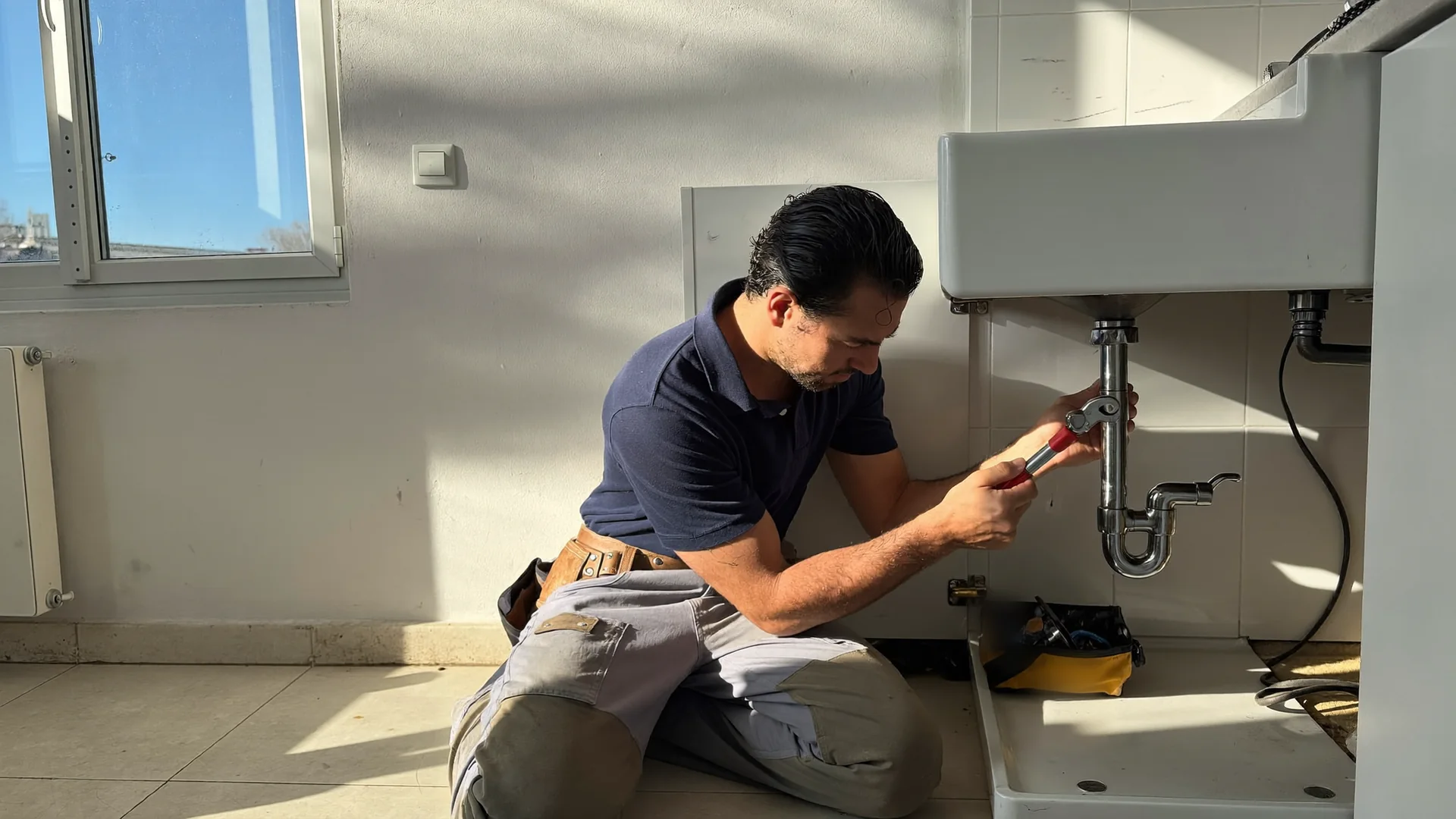
A hidden leak is a detective job before it is a plumbing job. The point of detection is to open the smallest possible hole in the right place, instead of the biggest possible hole in the wrong one.
Close every tap, note the meter, wait an hour. If the dial has moved, water is leaving the system somewhere. This is free, it takes an evening, and it settles half the arguments before anyone is called.
Pressurised pipes hiss where they leak, and a wet screed reads colder than a dry one on a thermal camera. Between them, a competent detection job narrows a whole floor to a square metre.
Breaking tiles is the last step, not the first. If a plumber wants to start chasing walls before locating anything, that is the moment to ask for a second opinion.
Detection and repair are two separate jobs, and they are often priced separately. Knowing that in advance stops an unpleasant surprise on the invoice.
Where the damp is, how long it has been there, and whether anyone below has complained.
The plumber isolates the circuit, tests the meter and works over the suspected area with acoustic or thermal equipment.
You want a sentence naming the location and the likely cause. It is what an insurer or a condomínio administrator will ask for.
The repair itself is often the quick part. Plaster and screed take days to dry, so repainting straight away is money thrown away.
Insurance and the condomínio, in one paragraph. If the leaking pipe serves only your flat, it is normally yours. If it is part of a shared column or the building's fabric, it is normally the condomínio's. Home insurance in Portugal commonly covers the damage caused by water and much less often the pipe itself. None of that can be settled without a written finding naming the location, which is exactly why a detection visit is worth paying for.
Detection plus repair is reported at €60–320. Typical range according to public price pages — indication, not a quote. Sources: Fixando's Lisbon plumber price page and Zaask's plumbing cost guide, read in August 2026.
Detection equipment is expensive, so fewer plumbers own it and they cover wider areas. Expect an appointment rather than a same-hour visit, and expect the first available slot to be worth waiting for.
Related: Emergency plumberBlocked drainsPricesLandlords & AL hosts Esta página em português
Rising damp and condensation move with the seasons and the weather; a leak does not. The meter test is the deciding evidence: with every tap closed, a meter that keeps turning means water is escaping, whatever the wall looks like.
Usually into the ground under a floor slab, into a wall cavity, or down the outside of a building where nobody looks. A leak large enough to triple a bill is large enough for acoustic equipment to find, which is the good news in an unpleasant situation.
Yes, and it is common. Water runs along beams and screed before it drops, so it can surface several metres from the actual break. That is precisely why guessing is expensive and detection is not.
Clearing the floor along the suspected wall and giving access to the meter is enough for most visits. Thermal work does prefer a room that has not just been heated or aired, so leave the windows shut for an hour beforehand.
Most will write down what they found and what they repaired, and that document is what the insurer needs. Handling the claim itself is your side of the job — ask for the report and the invoice in the name of whoever holds the policy.
Almost never. Leaks pause when pressure drops, when a joint swells or when a seasonal pipe stops being used. Redo the meter test a week later before you spend anything on redecorating.
Send the wall, the ceiling below and a shot of the meter. That combination tells a plumber whether this is detection work or a visible repair.
Run the meter test tonight and send the result with your request. It makes the first visit far more useful.